
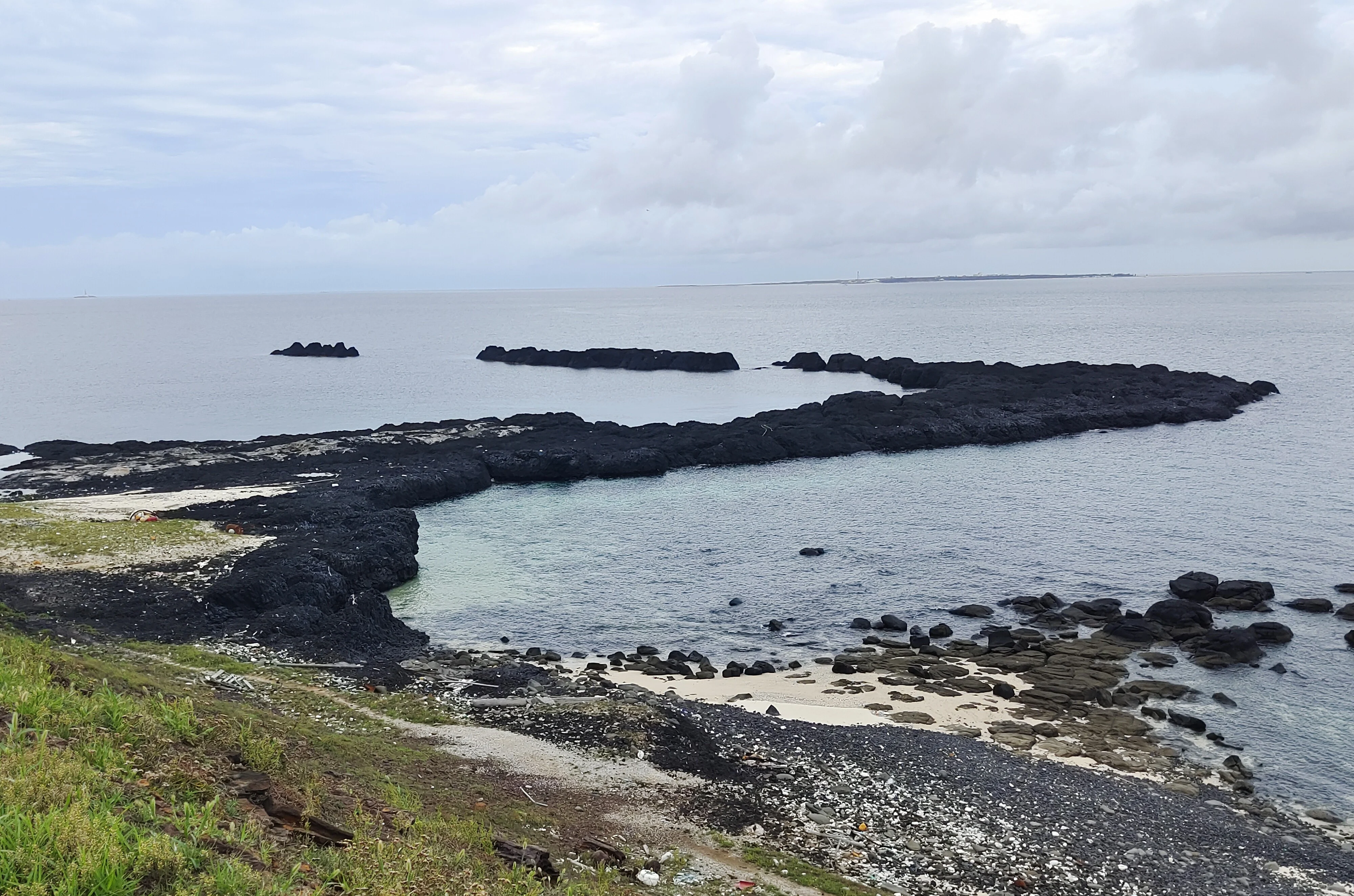
Gupo Islet is located in the northern waters of Penghu and administratively belongs to Baisha Township. It is an uninhabited island, mainly formed of basalt, with large basaltic wave-cut platforms along its coast. The uneven surface of these rocks creates numerous grooves and crevices where wild laver can attach and grow.During winter, when wild laver is in season, local residents from Chikan traditionally travel to Gupo Islet to harvest it. There is even a traditional seaweed-harvesting competition, in which the person who collects the most laver is declared the winner. This tradition reflects the close relationship between the local community and the island's natural resources. The distinctive rocky coastline therefore provides not only a unique geological landscape, but also an important natural resource connected to the traditional fishing culture of Penghu.The island also features a distinctive geological landscape, where dark basalt contrasts with reddish-brown soil. The reddish color is associated with iron-rich materials in the weathered geological layers, creating a striking contrast with the black volcanic rock.Gupo Islet also has an important historical connection to the sea. In 1892, the British merchant ship Vessel Clark was wrecked near the island, resulting in the deaths of many people. A monument was later erected on the island to commemorate those who lost their lives in the disaster.From volcanic rocks and winter seaweed harvesting to a century-old shipwreck monument, Gupo Islet is a place where Penghu's geology, traditional culture, and maritime history come together.
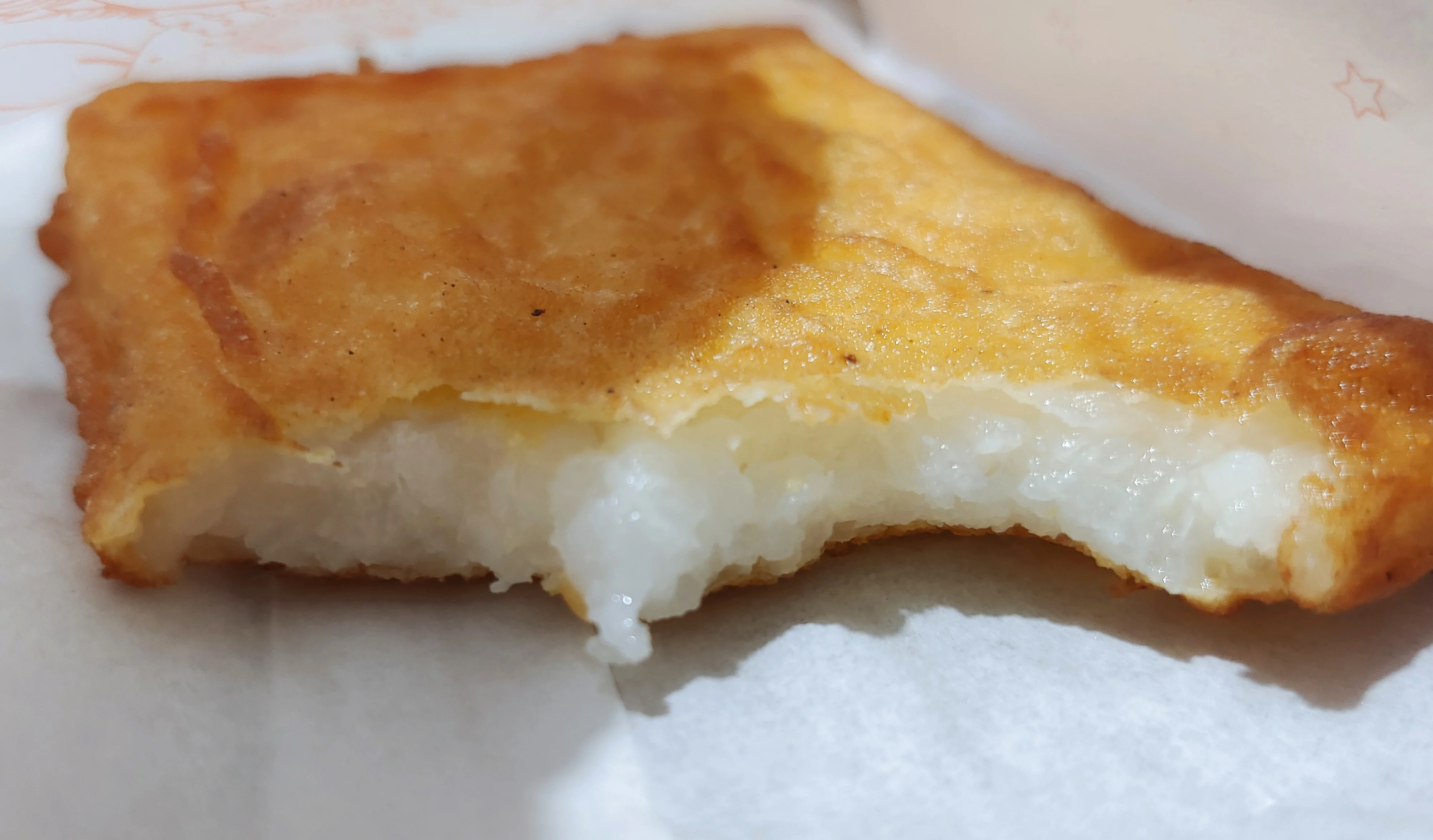
In Chinese culinary culture, rice is the undeniable staple, giving rise to a variety of regional snacks. In Penghu, there is a highly distinctive—yet sadly fading—traditional treat known as the fried rice cake, or Mi-Gao-Zha.Locals refer to it in Taiwanese as Mi-Gao-Ji. In the old days, it was a ubiquitous street food. For many who grew up in Penghu, a quintessential childhood memory involves elders returning from the morning market or work, often carrying a steaming bag of assorted treats—which frequently included these golden bites.The charm of Mi-Gao-Ji lies in its unique texture. The filling is made of partially cooked rice that sits somewhere between the distinct grains of steamed rice and the chewy elasticity of mochi. Fresh out of the fryer, it boasts a perfectly crispy exterior that gives way to a dense, soft center. Complemented by a straightforward, savory aroma of hot oil, it delivers a rustic yet unforgettable flavor. However, much like many traditional delicacies, Mi-Gao-Ji has found its survival space squeezed by the endless influx of modern food trends. Today, only a handful of vendors are still dedicated to crafting this old-school snack. If you ever find yourself visiting Penghu, why not turn your trip into a culinary treasure hunt? Wander through the winding alleys and see if you can track down this fading, savory taste of history.
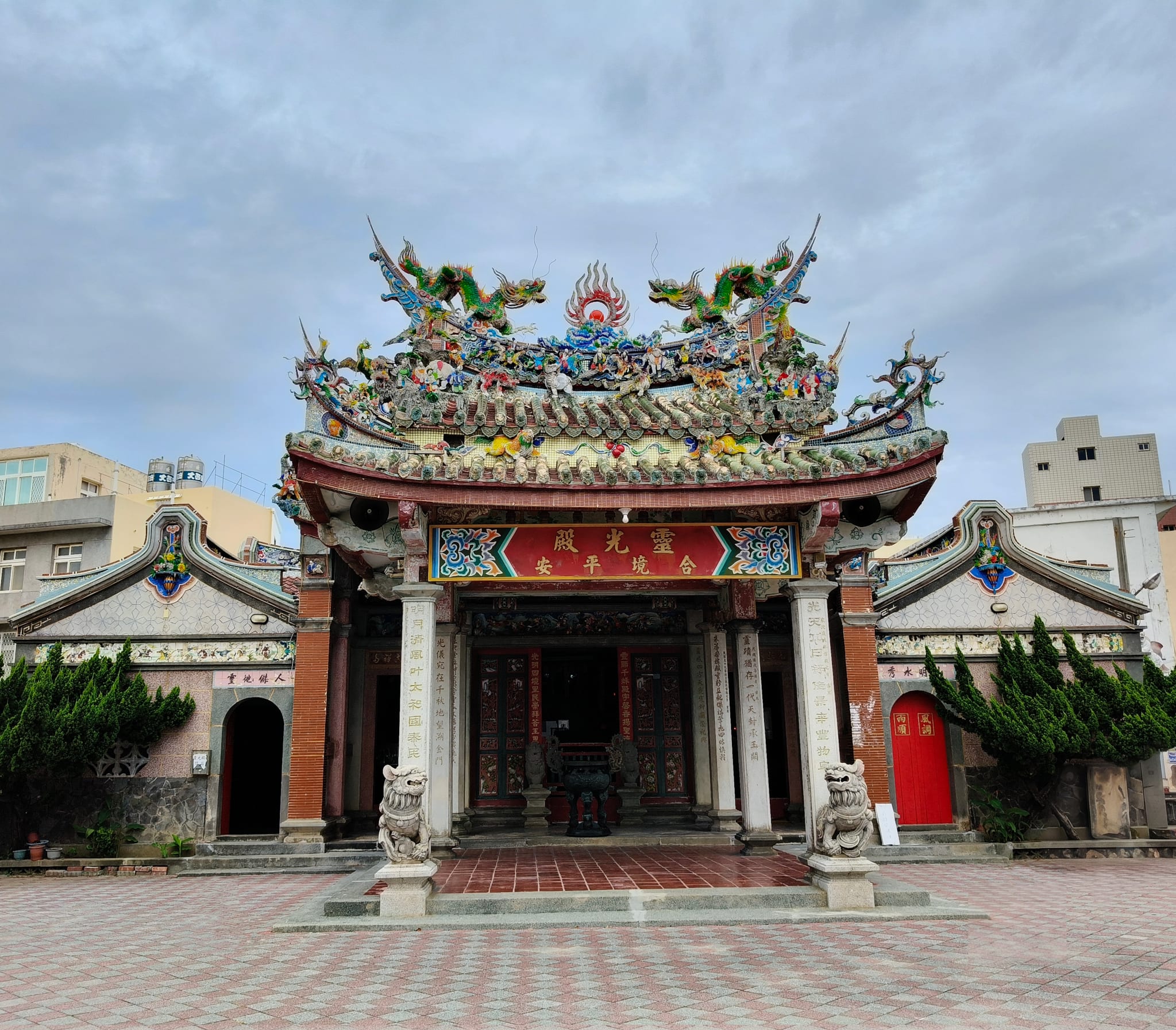
For many international visitors setting foot on Penghu for the first time, the charm of these islands extends far beyond their turquoise seas and golden beaches. To truly understand the culture of this island community, one must also look into the traditional beliefs, settlement history, and local memories that have been woven into everyday life for generations.Located in Guangrong Neighborhood, Magong City, Lingguang Temple (靈光殿) is one such place. With its simple architectural character dating back to the 1932s, the temple has long served as a local center of faith and stands as a quiet witness to the changes that have shaped the community over the centuries.I. The Ancient Place Name "Huoshaoping" and the Historical Context of Guangrong VillageGuangrong Neighborhood in Magong City, where Lingguang Temple is located, was historically known as "Huoshaoping" (literally "Burned Flat"). According to local accounts, there are two main explanations for how this name came to be.The first account suggests that in the early days, before this area developed into a settlement, Chinese fishermen would come here to fish and stay temporarily, building simple thatched huts for shelter. Later, as some decided to settle permanently, they burned these huts to the ground and built several traditional coral-stone houses, locally known as lo-ko-tshu. Over time, these houses grew into a community that came to be known as "Huoshaoping."Another account explains that in the Southern Min dialect, the word ping (坪) refers to a "plaza"—an open space used by farmers for drying grain or by fishermen for drying catches. Early settlers often built elevated wooden racks in the open plazas outside their homes, hanging strings of seafood from the structures to dry. Over the season, these racks would inevitably accumulate a strong fish odor. Therefore, when the seasonal winds shifted and these early fishermen prepared to return to Fujian for the winter, they would burn down all the wooden racks to maintain environmental hygiene. Because of this annual practice, the area earned the name "Huoshaoping."II. Shipwreck Legends and the Origin of "Zhu Ling Gong"Acts of Kindness and Miracles (Late Ming and Early Qing Dynasties):Legend has it that during the late Ming and early Qing dynasties, local fishermen found three bodies washed ashore following a severe storm at sea. The kind-hearted villagers properly buried them and set up a small tomb for worship. Over time, the residents discovered that their prayers to these spirits for safe voyages and bountiful harvests were remarkably effective. Thus, they respectfully called the deities "Zhu Ling Gong" (Lords of All Spirits).Spirit Writing Revealing Origins and Evolving Duties :In 1929 (the 4th year of the Showa era during the Japanese colonial period), through the instructions of a local Phoenix Hall [Note 1] via Spirit Writing [Note 2], the deities revealed their backgrounds. They were actually three scholars (with the surnames Zhu, Qiu, and Yu) from ancient times who were traveling by boat from Kinmen to Fuzhou to participate in the imperial examinations, but tragically encountered a storm and perished at sea. Later, Deities Qiu and Yu were promoted and reassigned, leaving Deity Zhu to continue manifesting as a general to protect Huoshaoping. The villagers affectionately address him as "Lao Da Gong" (The Great Elder Lord).Temple Construction and Elevation to Wangye (1932–1934) : As the miracles became widely known, "Zhu Ling Gong" was elevated to the divine rank of "Lord Wangye." In 1932 (the 7th year of the Showa era), local villagers raised funds to build a temple, initially named "Zileng Temple," which was officially renamed "Lingguang Temple" in 1934. The temple structure seen today preserves the classical style from its reconstruction in the 1970s. III. Key Highlights for Foreign Visitors Wangye Worship: In Taiwan's island culture, "Wangye" plays the role of inspecting the world on behalf of Heaven, expelling plagues, and safeguarding the seas. Understanding Lingguang Temple helps foreign readers grasp the tight bond between traditional Taiwanese Taoism and folk maritime beliefs. Traditional Temple Architecture and Art: Visitors are highly recommended to look up and observe the colorful "Cut-and-Paste Ceramic Sculptures" (Jiannian) on the temple's roof eaves, as well as the intricate wood and stone carvings inside the temple, which represent the core essence of traditional Eastern temple architecture. IV. Practical Visitor Guide and EtiquetteLocation: Located in Guangrong Village, Magong City (No. 7, Lane 35, Wenguang Road), it is very close to the Magong city center and Beichen Market, making it highly accessible on foot or by scooter. "2026 Penghu Top 100 Stamps" Check-in Spot : Lingguang Temple is also one of the physical stamp collection points for the "2026 Penghu Top 100 Stamps: Magong Time Machine 1896" event. It is highly recommended to bring a stamp collection book to get a souvenir stamp. Temple Etiquette:Free admission; please keep quiet and respectful. When entering the temple, it is recommended to follow the traditional custom of "entering through the Dragon Gate (the right door when facing the temple) and exiting through the Tiger Gate (the left door)," avoiding the central door, which is strictly reserved for the deities to pass through. 🌐 ReferencesThe historical context, origin of place names, and geographical information in this article have been cross-referenced with the following official institutions and authoritative cultural databases to ensure objectivity and accuracy: :Wikipedia - Huoshaoping Lingguang Temple 👉 https://zh.wikipedia.org/zh-tw/靈光殿Taiwan Religion and Folk Culture Platform - Huoshaoping Lingguang Temple 👉 https://trfc.tw/temple/TWN012746Footnotes[Note 1] Phoenix Hall (Luantang / Daoist Shrine): Refers to a religious venue or folk believer organization dedicated to performing spirit-writing rituals, spreading morality, and delivering divine revelations.[Note 2] Spirit Writing (Fuluan / Planchette Writing):Process: Usually, a trained Luansheng (the holder of a peach branch or wooden pen, called the "Primary Spirit Writer") holds a Y-shaped wooden pen (peach wood pen). After devoutly inviting the deity to descend, the deity will possess or guide the writer through inspiration to record the divine message's characters on a sandbox or altar table.Function: In early eras when medicine was underdeveloped or historical records were scarce, villages encountering difficult problems, shipwreck mysteries, or seeking to understand a deity's background would use "Fuluan" to ask the gods for guidance, explain karma, or reveal miracles.
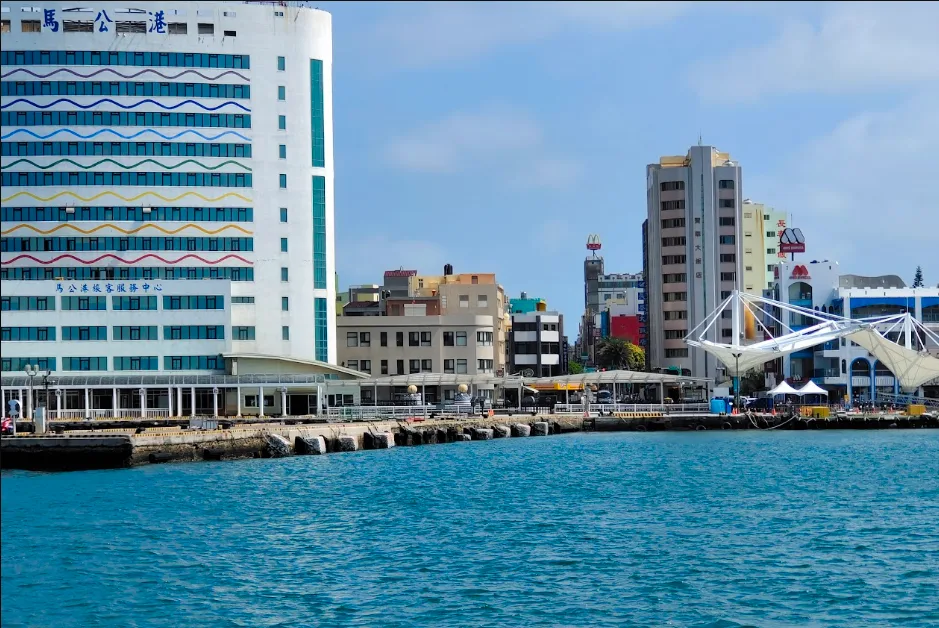
Standing at an intersection on Zhongzheng Road near Magong Port, the striking yellow "M" of the McDonald's signboard silently tells the story of Penghu's modernization and economic development over the past few decades. Whether you're strolling along the harbor or looking back at the shoreline from a departing boat, this sign—along with the nearby MOS Burger—means a lot to this offshore island.Before the Global GiantsLong before these international fast-food giants crossed the sea, locals frequented homegrown diners like "Dujiabao" (都家堡). Serving burgers, fries, and a variety of other meals, it was the go-to after-school hangout for countless students and remains a cherished, uniquely Penghu fast-food memory.Meanwhile, Taiwan's main island had welcomed McDonald's back in 1984, sparking nationwide crazes for breakfast sets, Happy Meals, and Hello Kitty plush toys. Yet, it took nearly 20 years for this large-scale, multinational franchise model to cross the Taiwan Strait. It wasn't until 2002 that Taiwan's first offshore Western fast-food chain—the McDonald's Magong Zhongzheng branch—officially opened its doors.A Hard Metric of Modernized LogisticsWhy would a fast-food restaurant be considered a benchmark for modernization?From a business standpoint, multinational chains have extremely strict criteria for expansion. Beyond the local population base and per capita spending power, the most significant hurdle is the cost of cross-sea cold chain logistics and raw material transportation.Thus, the arrival of McDonald's in 2002, followed by MOS Burger, signaled that Penghu's infrastructure, shipping logistics, and consumer market had matured enough to meet the rigorous demands of global enterprises. Their presence proved that Penghu had evolved from a traditional fishing island into a modern city capable of sustaining highly commercialized operations.Bridging the Gap: The Joy of SynchronizationBeyond the cold, hard logistics and commercial factors, the lighting of that yellow sign on Zhongzheng Road held a much purer meaning for the islanders back then—especially for the younger generation.In the past, satisfying a craving for McDonald's meant taking a plane or boat "across the sea". When McDonald's finally opened locally, the sheer joy of having it right around the corner brought a deep satisfaction.The next time you stroll near Magong Port or gaze at these fast-food signs from the sea—standing in slight contrast to the traditional harbor scenery—try viewing them as miniature historical landmarks. They offer more than just familiar flavors; they stand as quiet witnesses to Penghu's two-decade journey of integrating with global commerce.